
The POW Clean Miles Report
After a six-month campaign, Protect Our Winters UK has released the Clean Miles Report—here are their findings.
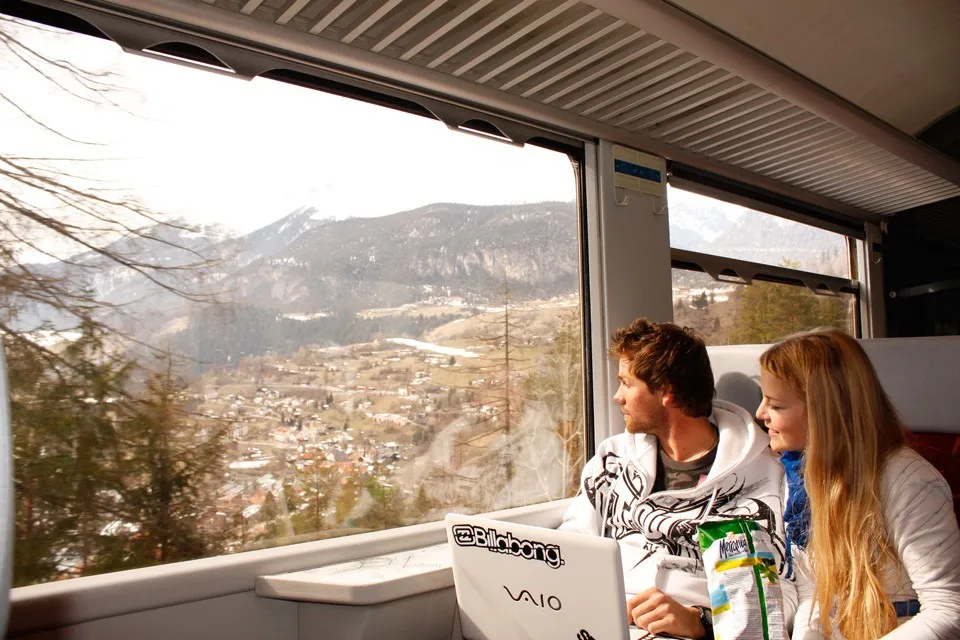
Recently, I attended the online launch of the Clean Miles Report by environmental snow organisation Protect Our Winters (POW) UK.
The report’s findings were enough to grab my attention, and hopefully yours, too.
After a six-month campaign involving nearly 1000 participants, POW’s headline was that transport was the single largest contributor to the carbon footprint of outdoor sports, both globally and in the UK. As you might expect, air travel was the main culprit.
At the same time, the report found that a switch to rail could reduce emissions by over 80%. Furthermore, among the 995 respondents who took the Clean Miles survey, POW found a significant minority who wanted to make the switch from air to rail travel, against the 2% who currently do. The biggest barrier, of course, was cost, followed by storage space for skis and snowboards on trains.
What struck me was that, among respondents, these barriers weren’t so much encountered on the Continent, but domestically. High prices, inconsistent baggage policies, and poor visibility on booking systems are putting many people off taking the train to St Pancras from starting points in the UK. Indeed, last year SnowCarbon extensively researched this to create a guide to taking skis and snowboards on UK trains.
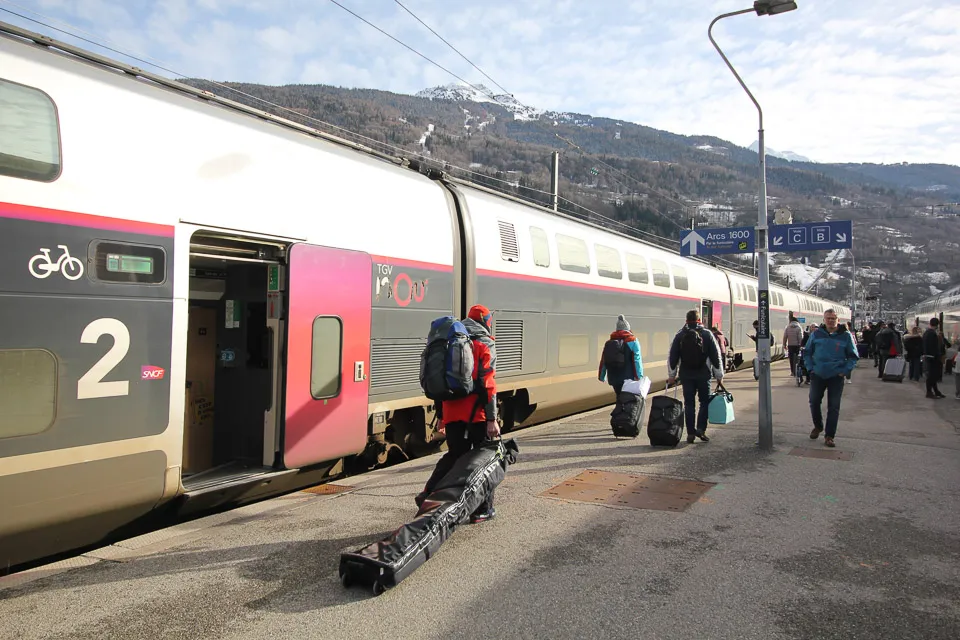 Photo: Daniel Elkan
As POW UK’s spokesperson highlighted, rail travel in mainland Britain is at a watershed moment. Following Wales and Scotland’s successful renationalisations in 2021 and 2022, respectively, England is finally renationalising their rail, meaning that in a few years, the entirety of National Rail will be in public hands for the first time in 30 years. There are also ongoing discussions of ending Eurostar’s monopoly over the Channel Tunnel. While neither of these guarantee cheaper prices or better management, they do open the possibility for change.
I think it’s important that, as a community, snow-sports and rail enthusiasts (including Snowcarbon readers!) are part of that conversation. As the biggest barriers are systemic, relating to infrastructure, sensible management, and private profit, guilt-tripping individuals is a losing approach. Instead, the emphasis should be on working together to put pressure on rail companies and the UK government, and to provide each other with much-needed community knowledge. That’s a big part of why SnowCarbon exists.
As a final note, after POW UK outlined their findings, a few more worthy organisations popped up on the call for an open Q&A. If you’re interested in finding out about the organisations making outdoor sports more accessible and accountable, I’ve listed them below.
In the meantime, you can read POW UK’s Clean MIles Report or get involved in their advocacy for better rail infrastructure.
Further organisations:
· Protect Our Winters (POW): Charity founded in Colorado in 2007, with its UK branch starting in 2017. Focus on climate action within mountain sports, working with policymakers, educators, and outdoor sports communities.
· Ski Flight Free: A campaign to improve sustainable transport for skiers and snowboarders, set up by Iain Martin, founder of The Ski Podcast.
· Wheels for Wellbeing: London-based charity campaigning for wheelchair-inclusive cycling, including mountain biking. Advocate for wheelchair-users within discussions around train and bus design, access at outdoor sites, etc.
· Mountaineering Scotland: National representative body for mountain sports in Scotland, established in 1970. Currently focusing on improving integration between trains and buses, esp. as many Scottish mountain destinations are remote + carparks have seen increasing strain post-COVID.